Training without borders
Raytheon UK's CAST team equips British and NATO forces for the complexities of modern warfare.
For over three decades, Raytheon UK’s Command and Staff Training (CAST) programme has been at the forefront of training innovation – integrating live, virtual, and constructive environments to enhance realism and provide near-instant feedback. This approach, underpinned by Raytheon UK’s sovereign Advanced Battlespace Computer Simulation System (ABACUS), plays a crucial role in strategic exercises that bolster British and NATO allies’ capabilities.
With established training camps in the UK and Germany, off-site exercises in Brunei and Cyprus, and versatile mobile training capabilities, CAST is renowned for delivering training without geographical limitations.
“Our mobile CAST system is designed to deploy anywhere in the world within NATO locations in just a few days,” said Lee, CAST deputy team lead at the programme’s Melsonby site. “This rapid capability addresses the logistical challenges of transporting military equipment across borders and adapting to diverse training environments, ensuring that training remains effective and responsive.”
The CAST engineering team is unwavering in its commitment to delivering complex mobile exercises anytime, anywhere, and under challenging conditions. During the COVID-19 lockdowns, the team exemplified sovereign resilience by conducting essential field exercises for units dedicated to national protection. This agility was further demonstrated during the British Army’s ULU-WARRIOR exercise in May 2024, which involved transporting equipment and engineers over 10,000 miles away to meet training needs in South Asia.
In Brunei’s jungles, CAST engineers trained the Gurkhas using ABACUS, underscoring the critical role of Raytheon UK’s training and software in ensuring combat readiness across a variety of climates.
The CAST team provided specialised training in constructive simulation settings, focusing on maintaining the First Battalion, Royal Gurkha Rifles’ reputation as a versatile and elite fighting force.
This month, the CAST team has been back to training the First Battalion, Royal Gurkha Rifles for a major exercise, Haraka Thunder, now taking place closer to home at Merville Barracks, Colchester. Designed to test the Gurkhas’ high readiness as the Air Landing Battalion for the 16 Air Assault Brigade Combat Team, the exercise presents a different climate and terrain but maintains the same level of intensity according to Lee.
“The exercise is part of the validation for the UK’s Global Response Force,” Lee said. “We test and validate the ability of the First Battalion, Royal Gurkha Rifles to deploy rapidly by air, seize key terrain such as airfields, and conduct high-intensity combat operations. Our goal is to enhance and modernise how the Gurkhas fight.”
“Equipping our armed forces and NATO allies with cutting-edge, adaptable training is essential,” said Oliver, Training Transformation Services Programme manager. “Our long-standing collaboration with the British Army enables us to continuously advance training methods in today’s rapidly evolving landscape.”
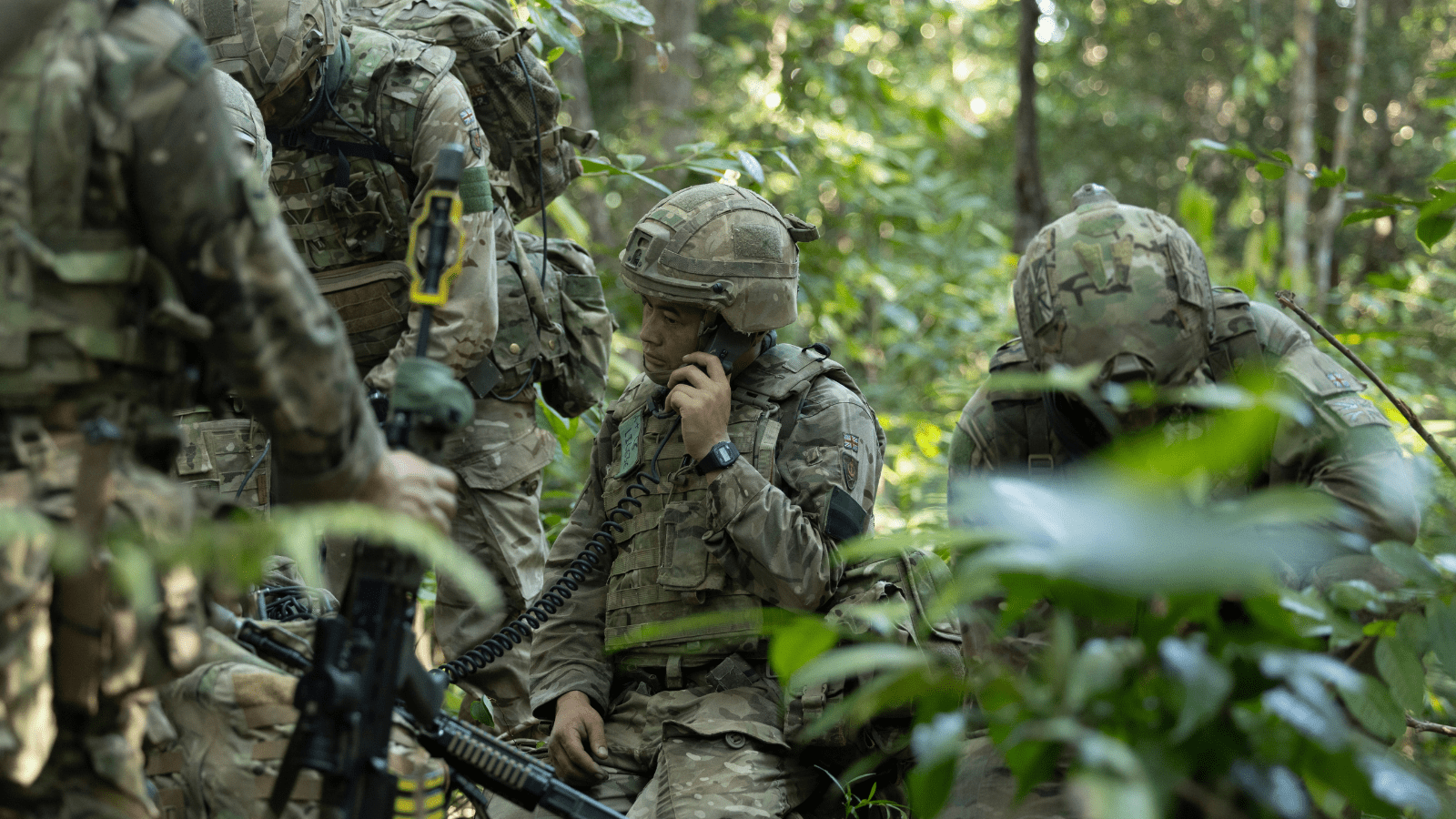
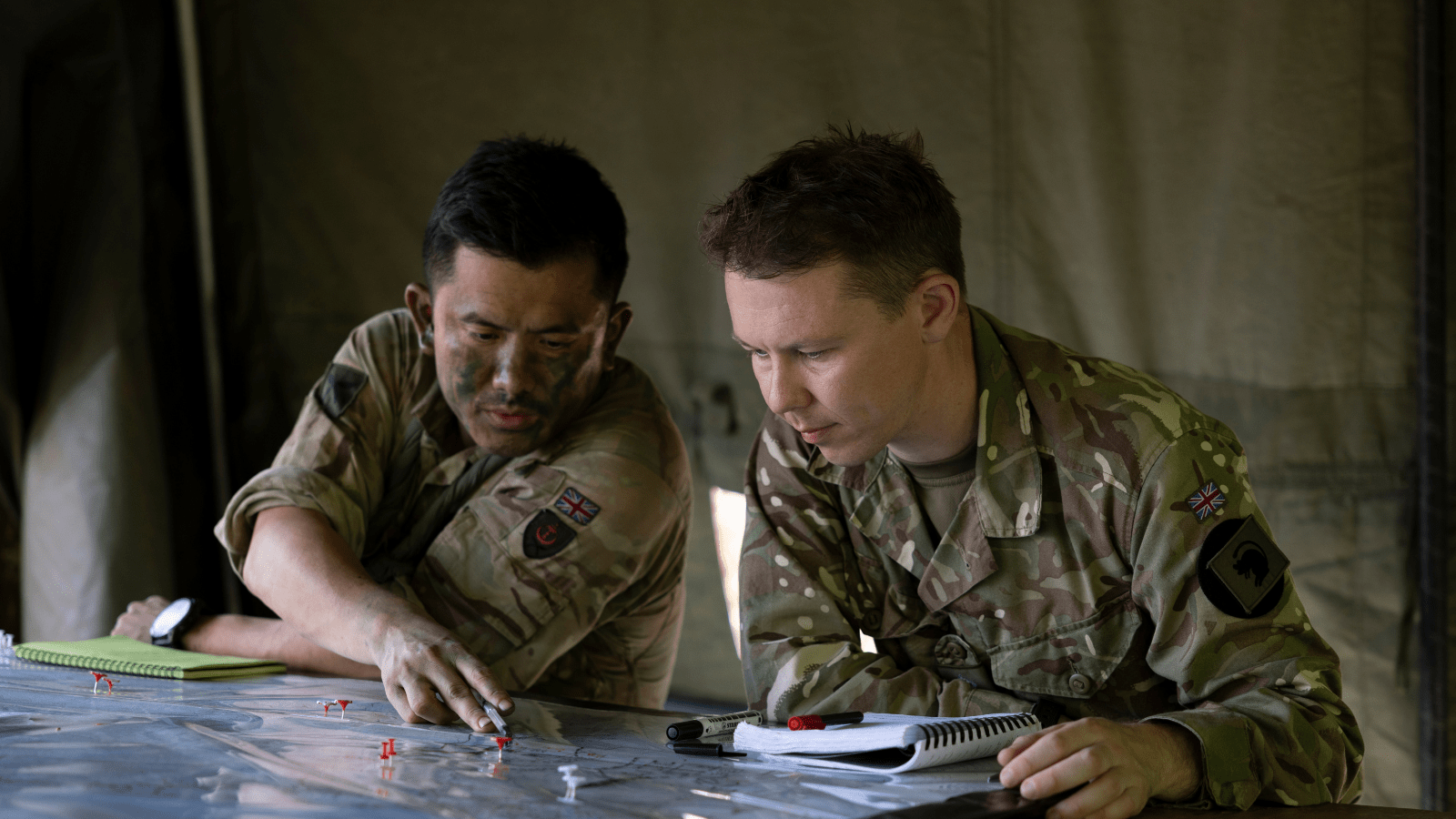
Exercise ULU-WARRIOR: The high temperatures and humidity, alongside the challenging jungle terrain of swamps, ridges and dense jungle growth make this some of the most challenging environments that the British Army trains in. UK MOD © Crown copyright 2024. Cpl Anil Gurang © Crown copyright 2024.
International Collaboration
Whether training environments are as diverse as Brunei or closer to home, CAST’s team of dedicated engineers ensures every exercise is meticulously planned and executed, providing substantial value to military operations.
“International collaboration is at the core of what we do,” said Dave, the CAST site lead at Sennelager, Germany. “We work closely with NATO forces, facilitating exercises that integrate various military units and technologies. This collaboration not only enhances training effectiveness but also fosters innovation through cross-national partnerships.”
This dedication is consistently reflected in the positive feedback CAST receives from military partners worldwide.
“Customer feedback is integral to refining CAST’s offerings. We’ve enhanced their experience by collaborating more closely to deliver greater value in training,” said Dave. “These adaptations ensure that exercises are tailored to evolving military needs, reflecting the CAST team’s commitment to impactful solutions.”
As the military landscape evolves, CAST is advancing training methodologies. Future enhancements may include collaborations with partner companies to incorporate advanced technologies into training programmes, aligning with the military’s strategic objectives.
“The CAST programme exemplifies Raytheon’s commitment to advancing military training through strategic innovation and partnership,” said Oliver. “ABACUS is a UK sovereign technology that ensures British and NATO troops are prepared for any situation, reducing risk on the front line. It is the ‘invisible shield’ that keeps our troops safe – ultimately keeping our communities safe.”